Frederico Freitas
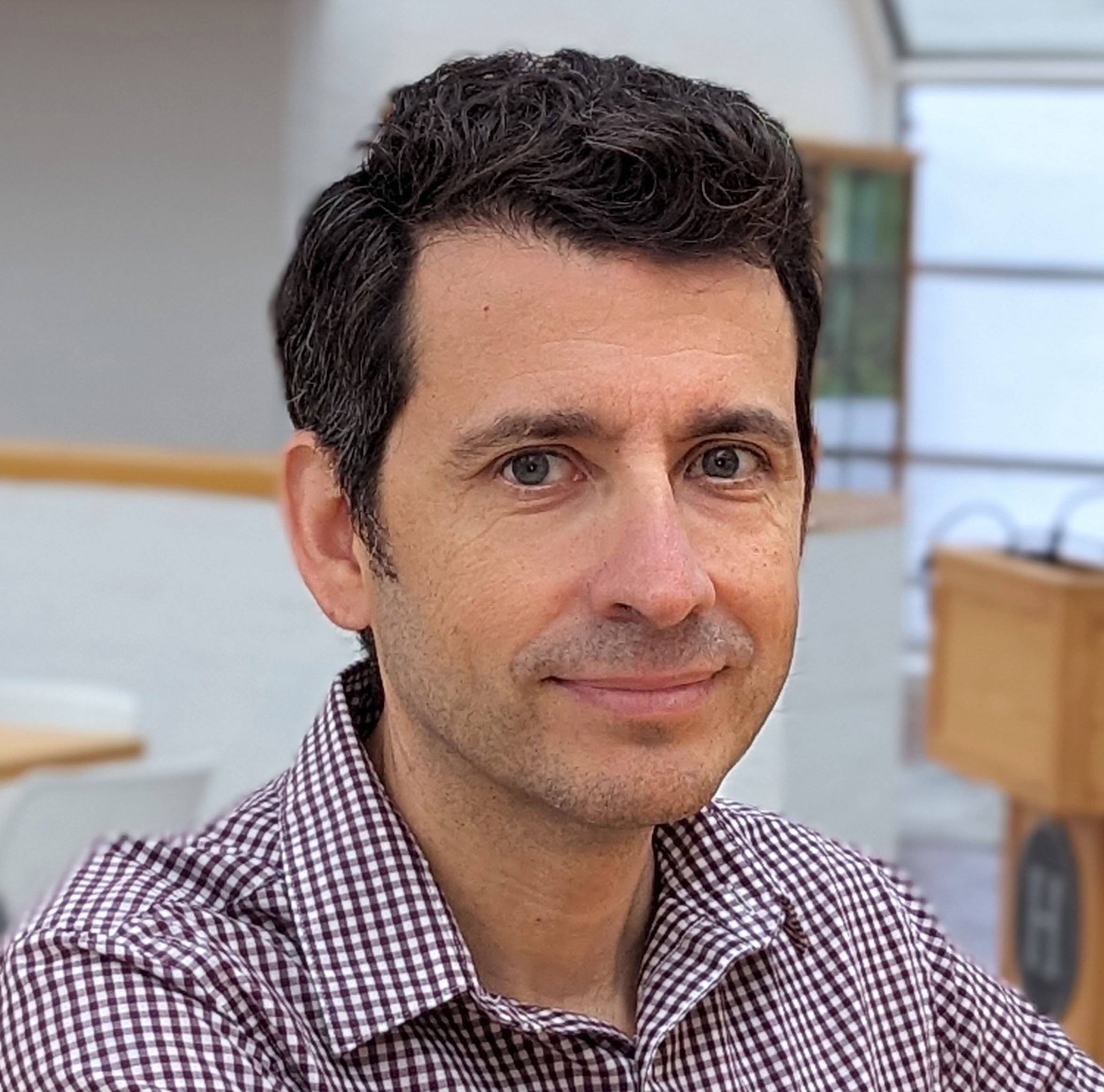
Bio
I am an environmental and digital historian working on modern Brazil. My previous research dealt with the creation of national parks on the border of Brazil and Argentina in the early twentieth century. My current project focuses on the planning, construction, and urban and environmental life of Brasília, Brazil’s modernist capital, built in the 1950s. I joined NC State in 2016 as part of the Chancellor’s Faculty Excellence Program’s Visual Narrative Initiative.
Teaching and Research Interests
My research focuses on the history of Latin America—especially Brazil—in the nineteenth and twentieth centuries. I focus on the intersection between environment and society, with a particular interest in the spatial and social implications of environmental policies.
My current book project, titled Concrete Tropics: An Environmental History of Brazil’s Modernist Capital, is an environmental history of Brasília, the modernist capital city built by Brazil in the 1950s. The book covers a century of the city’s history, from the initial mapping of a planned inland capital in the 1890s through its construction in the 1950s and continuing to the 1990s. As a modernist city designed on utopian ideals, Brasília was intended to provide a novel urban experience that would foster the emergence of a modern society. And yet, the city had to contend with the reality of the environment supporting its existence. Concrete Tropics shows how Brasília and the society it created are the products of not only the successes and failures of modernist planning but also the environmental processes that shaped the city’s construction.
My first book is an environmental history of the border between Brazil and Argentina in the twentieth century and the creation of the iconic national parks of Iguaçu (in Brazil) and Iguazú (in Argentina), two of the oldest and most visited protected areas in Latin America. The book— Nationalizing Nature: Iguazu Falls and National Parks at the Brazil-Argentina Border—was published by Cambridge University Press in March 2021. The book was the winner of the Warren Dean Memorial Prize (Conference on Latin American History) as the most significant work on the history of Brazil, received an honorable mention in the Bryce Wood Book Award (Latin American Studies Association) as an outstanding book on Latin America in the social sciences and humanities published in English, and an honorable mention in the Sérgio Buarque de Holanda Prize (Latin American Studies Association’s Brazil Section) for the best book in the social sciences on Brazil.
At NC State, I teach courses on Latin American history in the nineteenth and twentieth centuries, US-Latin American relations, Latin American urban history, and the theory and methods of digital history and spatial history, particularly historical GIS.
I also plan to introduce courses on Brazilian history. I am interested in topics such as modern environmental history, policymaking and state formation, urban studies, and transnational and borderlands history.
Funded Research
National Endowment for the Humanities Fellowship – 2019-2020
Non-laboratory Scholarship/Research Support Program (NSRP) (co-PI), North Carolina State University – 2018 and 2020.
DELTA Blended Learning Grant (co-PI), North Carolina State University – 2017-2018
For a complete list, see my CV.
Publications
Books (peer-reviewed)
The Interior: Recentering Brazilian History. Co-edited with Jacob Blanc. Austin, TX: University of Texas Press, 2025.
Nationalizing Nature: Iguazu Falls and National Parks at the Brazil-Argentina Border. Cambridge: Cambridge University Press, 2021.
Big Water: The making of the borderlands between Brazil, Argentina, and Paraguay. Co-edited with Jacob Blanc. Tucson, AZ: University of Arizona Press, 2018.
Selected Articles and chapters (peer-reviewed)
“Porous Conservation: The Complex History of Residents in National Parks in Latin America.” Co-authored with Claudia Leal and Emily Wakild. Annals of the American Association of Geographers 115, no. 10 (2025):2326-2336.
“Before Biodiversity: Trajectories of National Parks in Latin America (1930s-1980s).” Co-written with Claudia Leal and Emily Wakild. Latin American Research Review 60, no. 4 (2025):887-906.
“Placing Insects in Histories of Science,” co-written with Diego de Carvalho Cabral. ISIS 115, no. 1 (2024).
“Characterizing the Perception of Urban Spaces from Visual Analytics of Street-Level Imagery.” Co-authored with Berreth, Chen, and Jhala. AI & Society 38 (2023): 361-371.
“Hunters, Rangers, Cougars, and Jaguars: human and nonhuman territories at the Argentine-Brazilian border, 1960s-1980s.” HCSM 28, Supl. (Dec, 2021): 59-79.
“Protected Areas in Brazil: History and Current Status.” In The Oxford Research Encyclopedia of Latin American History. New York: Oxford University Press, 2021.
“Conservation frontier: The creation of protected areas in the Brazilian Amazonia.” In Frontiers of Development in the Amazon: Riches, Risks, and Resistances. Edited by Antonio Ioris et al. Lanham, MD: Lexington Books, 2020, 51-79.
For a complete list of publications, see my CV.
Graduate Advising
I am interested in working with students in Latin American history, environmental history, history of conservation and national parks, spatial and urban history, historical GIS, and digital humanities.
Office Hours
Spring 2025
- Mon: 3:00 p.m. – 4:00 p.m.
- Wed: 3:00 p.m. – 4:00 p.m.
Education
Ph.D. History Stanford University 2016
M.A. History Stanford University 2011
B.A. History University of São Paulo 2008
Area(s) of Expertise
Latin American History, Environmental History, Conservation, Urban Studies, Digital Humanities