Preserving Human Stories with Jesse Eisenberg
The Human Factor returns to explore the power of storytelling.

A story. A memory. A character. A piece of family history. What do we keep?
For the College of Humanities and Social Sciences (CHASS), that question was at the heart of the second installment of its Human Factor Speaker Series. Academy Award-nominated actor, writer, and director Jesse Eisenberg headlined the sold-out event, exploring how stories connect us, shape us and sustain our humanity.
The event also showcased the importance of the humanities and social sciences as technology transforms our world. Its theme, “Preserving Human Stories,” explored challenges from AI’s impact on creativity and identity to how we chronicle and protect our shared histories.
The Sept. 18 event at Stewart Theatre, funded by private donations, brought the theme to life through conversations, music, film and voices from the NC State community. Eisenberg’s visit also included a session exclusively with students.


The show opened on a library-inspired set, with devices and archival images tracing the evolution of storytelling. Poet and MFA faculty member Chelsea Krieg performed her original poem, “The Stories We Tell,” a fitting introduction to the evening. The Wolfpack Pickers, a bluegrass outfit made up of CHASS faculty and staff, accompanied Krieg’s performance and served as the house band for the evening.
Krieg introduced CHASS Dean and event moderator Deanna Dannels, who welcomed the more than 600 attendees and invited Eisenberg to join her. From the first exchange, the two found an easy rhythm, and what followed was part conversation, part storytelling and entirely human.
Creativity and Technology
Dannels kicked off the program asking Eisenberg about his creative process. Responding in his trademark rapid-fire way, he said his process is more disciplined nowadays, and his goal is to make one movie a year. “Getting older makes me treat it like a job rather than a magical thing that occasionally floats into my head.”
He explained that he goes to the library, sits next to a guy named Jim, and works on his own projects while Jim works on his. They keep each other on task, he added.

Asked what technology hasn’t changed, Eisenberg said: “Original ideas.” And regarding artificial intelligence, he added, “I’ve tested AI to see if it can write better than me. I’ll give it a 30-page script or something and say, ‘Write what you think would be an improvement,’ and it’s just nowhere near as good. I’m not saying, ‘I’m better ’; I’m saying it doesn’t come close to being the human thing that I’d be worried about.”
Discussing The Social Network and what it suggests about the human condition and isolation, Eisenberg noted: “I grew up doing theater, and my life has been one about connecting with other people,” he said. “I feel lucky that I have a lot of those experiences.”
History professor Ajamu Dilahunt-Holloway then took the stage to explore the lasting power of stories, books and community through the legacy of Freedom Books, Raleigh’s first African American bookstore. He told the story of his grandparents, who owned the bookstore that served as a source of community, education and activism during its operation in the 1980s and 90s.
Preservation and Questions
CHASS alumna and YouTube essayist Marianna Colin asked via video how Eisenberg’s anthropology background shaped his career. “Other people’s way of life is just as valid as yours, and as an actor and writer of fictional characters, that’s the greatest possible gift.”
Eisenberg described many of the people in his stories as “maladaptive characters.” He said they are stuck in a place of real difficulty and pain, like those portrayed in A Real Pain.
The conversation turned to what stories are worth preserving and what lessons have stayed with Eisenberg. He said his wife, a public schoolteacher, has taught him that “we could all do more to help other people,” changing how he sees the world.


Reflections and Surprises
Dannels and Eisenberg recalled roles and projects that shaped his life and career. It started with a photo of Eisenberg as a child portraying what he described as a “Jewish Elvis Presley” at summer drama camp. Clips from his work, including an early Dr. Pepper commercial and photos from The Spoils, Rio, and The Debut, sparked memories and laughs.
As a parting gift, Dannels gave Eisenberg an NC State cap, which he immediately donned and christened “his understudy cap.” She thanked him and reflected on the evening before introducing a final form of storytelling: music. The Wolfpack Pickers performed a traditional bluegrass tune, “Roll in My Sweet Baby’s Arms,” and Eisenberg returned with his guitar to join them – an unexpected and memorable encore.


Before the Show
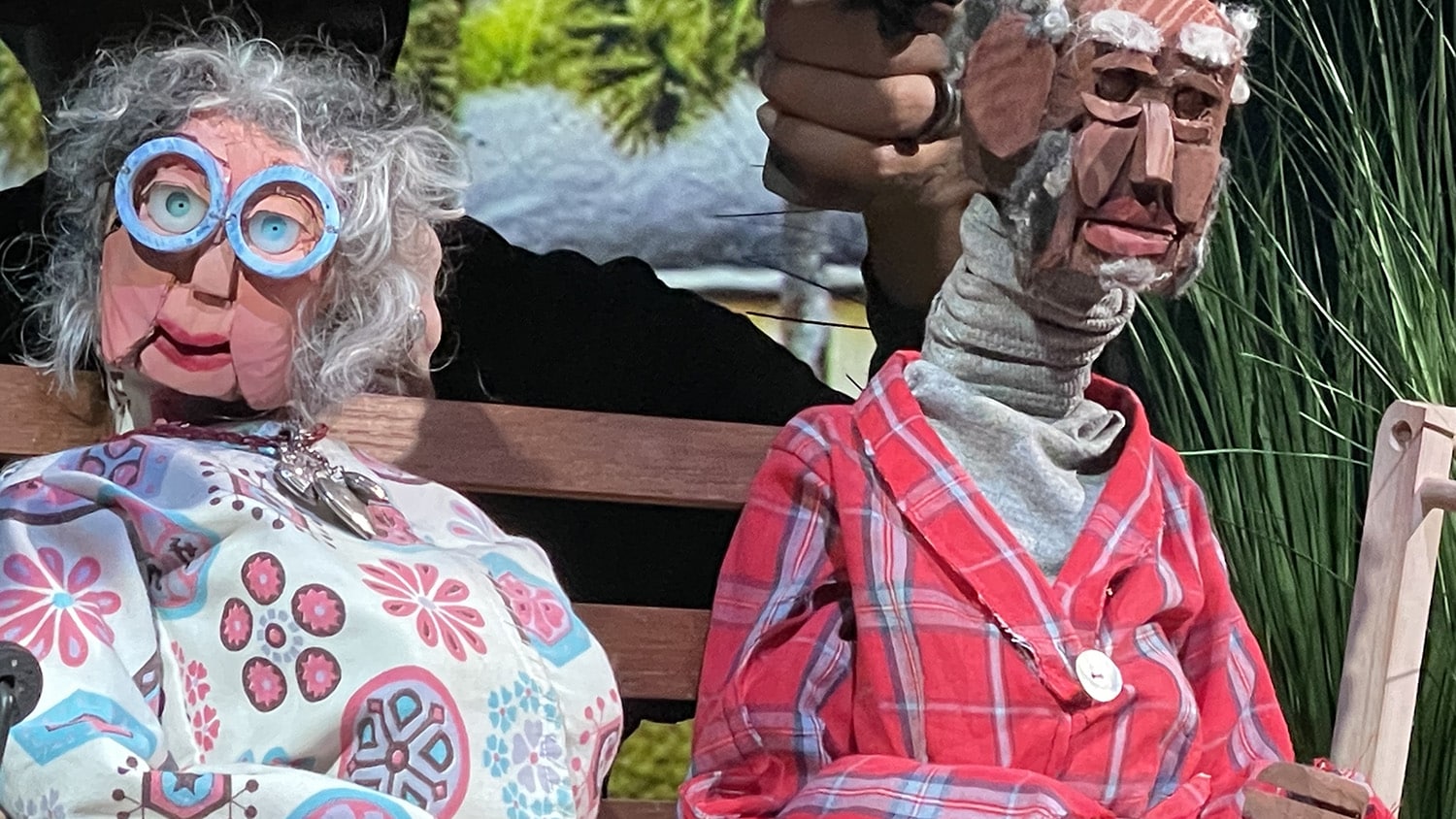
At the VIP reception before the show, CHASS faculty shared objects that told stories of the college’s research, teaching and impact. The display included a hand-crafted marionette made of materials found in the North Carolina woods, a wooden camera used to teach silent films, Bigfoot casts and ancient pottery excavated by an NC State team.
The food also told tales. Grilled octopus conjured the Nautilus crew’s encounter with a giant octopus in Twenty Thousand Leagues Under the Sea. Bánh mì and coconut water with pulp showed how food carries stories across cultures. Carrot cake and lemon balm panna cotta reflected how natural ingredients become recipes, memories and stories.


Books came to life through food in an interactive display. Guests opened small doors labeled with titles from The Odyssey to Moby Dick to discover foods inspired by the stories.
Political science and history alumnus Andriy Shymonyak traveled from Washington, D.C., to show his support for CHASS. “Now more than ever, it’s important to show you care by showing up,” said the senior program manager for Europe and Eurasia at the National Democratic Institute.
Asked what story he would preserve from the evening, he said: “The power of relationships to make a positive impact on the world.”
To Be Continued
Throughout the academic year, the “Preserving Human Stories” theme will continue through complementary programs. The lineup includes an alumni panel of sports storytellers, a book drive, a second speaker, and more.
The Human Factor will return next year with another exciting installment. Look for updates throughout the year.
In the end, it all came back to the question at the heart of the evening: What do we keep?
“The answer lies in the stories that anchor us,” Dean Dannels said. “That is the human factor: safeguarding the voices that shape who we are, deepen how we see one another and inspire us to improve the world we share.”